
CLS

Blue Team Defensive Security & SOC Professional

Bestseller
Total Duration 120 Hours
Level Beginner

Skills you'll learn

20 skills
Cybersecurity Fundamentals
Network Security
Windows Security
Web Security
Firewall Security
Cyber Defense
SIEM Operations
SOC Analysts
Cybersecurity Analyst
Network Defense Analyst

Prerequisites

Basic understanding of computers and operating systems
Fundamental knowledge of networking concepts

Course Outline

This isn't just a course. It's a structured path designed to turn you into a specialist ready for the global job market.

  • What is Cybersecurity?
  • Career Paths in Cybersecurity Overview of roles, responsibilities, and certification roadmap
  • Offensive vs. Defensive Security
  • Introduction to Networking
  • The OSI Model
  • TCP/IP Protocol
  • Subnetting & IP Addressing
  • Network Traffic Analysis with Wireshark
  • Linux Introduction
  • Essential Commands Navigation, file operations, text processing
  • User & Group Management Creating users, modifying permissions
  • File Permissions Understanding rwx & chmod
  • Bash Scripting Basics
  • Windows Fundamentals
  • Windows Security Features UAC, Windows Defender.
  • Active Directory fundamentals : Domains, forests, trusts & Group Policy
  • Windows Permissions
  • How the Web Works?
  • DNS Deep Dive: DNS resolution process, record types & DNS security
  • HTTP Protocol & Methods
  • Introduction to Cryptography Goals: Confidentiality, Integrity, Availability & Non-repudiation.
  • Symmetric Encryption.
  • Asymmetric Encryption, Diffie-Hellman key exchange.
  • Hashing & Digital Signatures SHA family & MD5
  • Ethical Hacking Methodology Reconnaissance, scanning, exploitation, post-exploitation & reporting
  • Information Gathering Passive vs. active reconnaissance, OSINT techniques.
  • Scanning & Enumeration Port scanning, service detection, vulnerability scanning.
  • Vulnerability Assessment
  • Vulnerability Assessment Tools
  • Tool Purpose
  • Nessus Comprehensive vulnerability scanning
  • Acunetix Web application security scanning
  • Nuclei, template-based vulnerability scanner
  • Vulnerability vs. Exploit vs. Misconfiguration.
  • Common Vulnerability Types.
  • OWASP.
  • Exploitation Frameworks
  • Security Monitoring Fundamentals
  • IDS/IPS Systems Signature vs. anomaly detection.
  • Firewalls & Network Security
  • SIEM Fundamentals Log aggregation, correlation rules & dashboards Using Elastic Search.
  • SOAR Solution.
  • Malware Analysis & Sandboxing
  • Incident Response Process

Target Audience

Designed to meet the needs of learners at different career stages, empowering them to build user-centered digital experiences

Cybersecurity professionals who want to practical skills in defensive security and SOC operations.
SOC Analysts who want to strengthen their skills in monitoring, detection, investigation and incident response.
IT & Network Administrators interested in security monitoring, threat detection and incident handling.
Incident Response professionals who want to develop structured incident investigation and containment skills.
Threat Intelligence Analysts looking to strengthen their capabilities in threat analysis, threat hunting, and intelligence reporting.
Cybersecurity Analysts who want practical experience with logs, malware analysis and threat detection.
Learning outcomes

What you'll learn

Understand Cybersecurity Fundamentals
Apply Networking and Traffic Analysis Concepts
Operate in Linux and Windows Environments
Understand Web Technologies and Security
Apply Cryptography Fundamentals
Understand Offensive Security Concepts
Understand Defensive Security Concepts
Definition of Security Operations Centre (SOC) in relation to cybersecurity
SOC Architecture, components, and workflow process
Different types of SOCs and KPIs
Cyber-attack and hacking techniques
Cyber Kill Chain and MITRE ATT&CK
Malware static and dynamic analysis
Detection of malicious activities in a sandbox environment
Cyber threats and identifying threat actors (APT groups, cybercriminals, hacktivists).
Use of cybersecurity frameworks such as Cyber Kill Chain and MITRE ATT&CK to recognize attack patterns.
Conduct OSINT, internal, external, and tool-driven threat data collection.
Identify Indicators of Compromise (IoCs).
Basics of Threat Intelligence Platforms (TIPs) and popular tools for threat intelligence (MISP, VirusTotal, AbuseIPDB).
Understanding of threat hunting and hypothesis-based threat investigation.
Identify and analyze security incidents and Indicators of Compromise (IoCs)
Apply incident response processes and handling methodologies
Investigate and respond to malware-related incidents
Handle network and endpoint security incidents effectively
Create professional incident reports and documentation
About this course

About this course

The Blue Team Defensive Security & SOC Professional track provides a practical foundation in defensive cybersecurity, Security Operations Center (SOC) operations, threat intelligence, and incident response.

It takes participants from core cybersecurity, networking, operating system, web, and cryptography concepts into the processes and tools used to monitor, detect, investigate, and respond to cyber threats.

By the end of the track, learners will be able to apply a structured defensive approach to security monitoring, threat detection, threat hunting, incident investigation, containment, and response, while producing clear security reports and communicating actionable findings to SOC teams and relevant stakeholders.
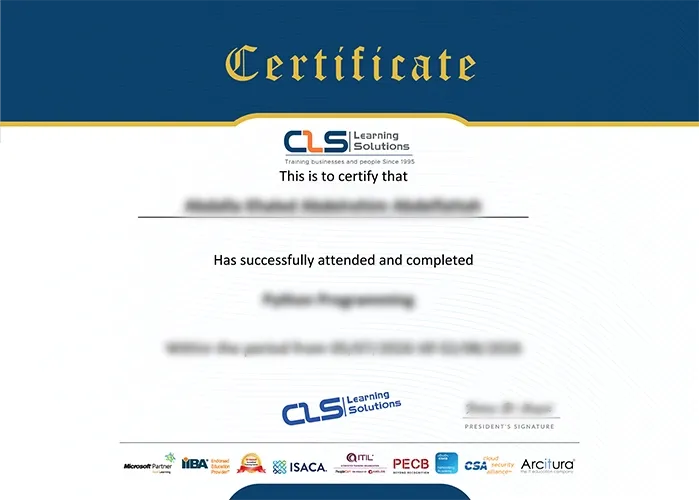

Accredited Credentials

  • Attendance Certificate from CLS Learning Solutions 
Blue Team Defensive Security & SOC Professional

Potential Career Paths

Cybersecurity Analyst
SOC Analyst
Information Security Analyst
IT Security Specialist
Incident Response Analyst
Cyber Defense Analyst
Security Operations Engineer
System Administrators