
CLS
Cybersecurity

EC-Council Certified Incident Handler ECIH

Certified Incident Handler program equips students with the knowledge, skills, and abilities to effectively prepare for, deal with, and eradicate threats and threat actors in an incident.

Total Duration
24 Hours
Level
Intermediate
Category
Cybersecurity
Partner
EC-Council
About this course

About this course

ECIH training provides the entire incident handling and response process and hands-on labs that teach the tactical procedures and techniques required to effectively plan, record, triage, notify, and contain. Students will learn the handling of various types of incidents, risk assessment methodologies, and laws and policies related to incident handling. After attending the course, students can create IH&R policies and deal with different types of security incidents such as malware, email security, network security, web application security, cloud security, and insider threat-related incidents.
Target Audience

SOC professionals interested in improving their incident response abilities
Network and systems administrators dealing with security monitoring and troubleshooting
Security professionals dealing with threat detection and incident investigation
Individuals from the information security profession who want to enrich their skills and knowledge in incident handling and response
Professionals preparing for EC-Council E|CIH exam

Prerequisites

1 year of information security experience

Course Outline

  • Understand Information Security Threats and Attack Vectors
  • Explain Various Attack and Defense Frameworks
  • Understand Information Security Concepts
  • Understand Information Security Incidents
  • Understand the Incident Management Process
  • Understand Incident Response Automation and Orchestration
  • Describe Various Incident Handling and Response Best Practices
  • Explain Various Standards Related to Incident Handling and Response
  • Explain Various Cybersecurity Frameworks
  • Understand Incident Handling Laws and Legal Compliance
  • Understand Incident Handling and Response (IH&R) Process
  • Explain Preparation Steps for Incident Handling and Response
  • Understand Incident Recording and Assignment
  • Understand Incident Triage
  • Explain the Process of Notification
  • Understand the Process of Containment
  • Describe Evidence Gathering and Forensics Analysis
  • Explain the Process of Eradication
  • Understand the Process of Recovery
  • Describe Various Post-Incident Activities
  • Explain the Importance of Information Sharing Activities
  • Explain the Concept of the First Response
  • Understand the Process of Securing and Documenting the Crime Scene
  • Understand the Process of Collecting Evidence at the Crime Scene
  • Explain the Process for Preserving, Packaging, and Transporting Evidence
  • Understand the Handling of Malware Incidents
  • Explain Preparation for Handling Malware Incidents
  • Understand Detection of Malware Incidents
  • Explain the Containment of Malware Incidents
  • Describe How to Perform Malware Analysis
  • Understand Eradication of Malware Incidents
  • Explain Recovery After Malware Incidents
  • Describe Best Practices against Malware Incidents
  • Understand the Handling of Network Security Incidents
  • Prepare to Handle Network Security Incidents
  • Understand Detection and Validation of Network Security Incidents
  • Understand the Handling of Unauthorized Access Incidents
  • Understand the Handling of Inappropriate Usage Incidents
  • Understand the Handling of Denial-of-Service Incidents
  • Understand the Handling of Wireless Network Security Incidents
  • Describe Best Practices Against Network Security Incidents
  • Understand the Handling of Network Security Incidents
  • Prepare to Handle Network Security Incidents
  • Understand Detection and Validation of Network Security Incidents
  • Understand the Handling of Unauthorized Access Incidents
  • Understand the Handling of Inappropriate Usage Incidents
  • Understand the Handling of Denial-of-Service Incidents
  • Understand the Handling of Wireless Network Security Incidents
  • Understand the Handling of Network Security Incidents
  • Describe Best Practices against Network Security Incidents
  • Understand the Handling of Web Application Incidents
  • Explain Preparation for Handling Web Application Security Incidents
  • Understand Detection and Containment of Web Application Security Incidents
  • Explain Analysis of Web Application Security Incidents
  • Understand Eradication of Web Application Security Incidents
  • Explain Recovery After Web Application Security Incidents
  • Understand the Handling of Web Application Security Incidents
  • Describe Best Practices for Securing Web Applications
  • Understand the Handling of Cloud Security Incidents
  • Explain Various Steps Involved in Handling Cloud Security Incidents
  • Understand How to Handle Azure Security Incidents
  • Understand How to Handle AWS Security Incidents
  • Understand How to Handle Google Cloud Security Incidents
  • Understand the Handling of Cloud Security Incidents - - Case Study
  • Explain Best Practices Against Cloud Security Incidents
  • Understand the Handling of Insider Threats
  • Explain Preparation Steps for Handling Insider Threats
  • Understand the Detection and Containment of Insider Threats
  • Explain Analysis of Insider Threats
  • Understand the Eradication of Insider Threats
  • Understand the Process of Recovery After Insider Attacks
  • Describe Best Practices Against Insider Threats
  • Understand the Handling of Endpoint Security Incidents
  • Explain the Handling of Mobile-Based Security Incidents
  • Explain the Handling of IoT-Based Security Incidents
  • Explain the Handling of OT-Based Security Incidents
Learning outcomes

What you'll learn

Various types of cybersecurity threats, attack vectors, threat actors, and their motives, goals, and objectives of cybersecurity attacks
Various attack and defense frameworks (Cyber Kill Chain Methodology, MITRE ATT&CK Framework, etc.)
Fundamentals of information security concepts (vulnerability assessment, risk management, cyber threat intelligence, threat modelling, and threat hunting)
Fundamentals of incident management (information security incidents, signs and costs of an incident, incident handling and response, and incident response automation and orchestration)
Different incident handling and response best practices, standards, cybersecurity frameworks, laws, acts, and regulations
Various steps involved in planning an incident handling and response program (planning, recording and assignment, triage, notification, containment, evidence gathering and forensic analysis, eradication, recovery, and post-incident activities)
Importance of first response and first response procedure (evidence collection, documentation, preservation, packaging, and transportation)

Skills you'll learn

12 skills
Threat Identification
Attack Analysis
Attack Frameworks
MITRE ATT&CK
Risk Management
Threat Intelligence
Incident Management
Response Automation
Digital Forensics
Incident Containment

Certificate

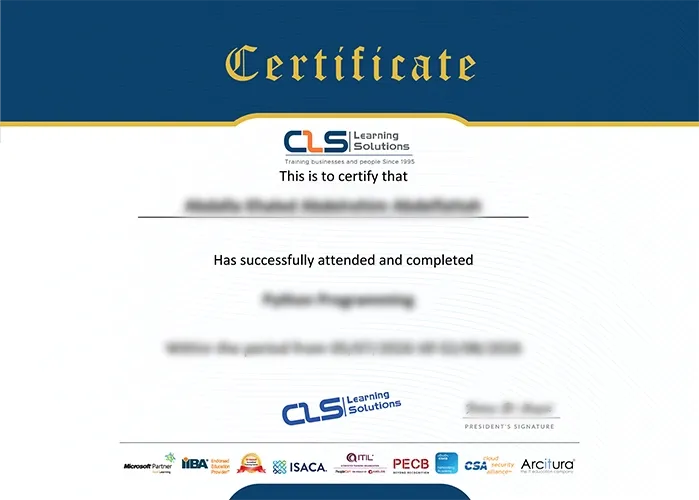
  • Attendance Certificate from CLS Learning Solutions
  • This course enables you to pass Certified Incident Handler (E|CIH) Exam
EC-Council Certified Incident Handler ECIH

Potential Career Paths

Incident Handler
Incident Responder
SOC Analyst
Penetration Tester
Information Security Associate
Cyber Defense Security Consultant/ Analyst
Cyber Intelligence Analyst